
STORIES OF OUR PEOPLE
In 2017, we asked the employees at the World Shaving Headquarters,
"What experiences have shaped who you are today?"
"I wish more people were understanding towards mental illness…"
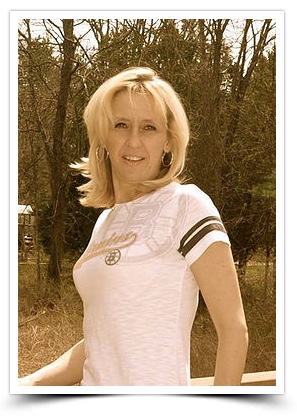
Raphaelle Cruz talks with Monya Fiore
Raphi is the middle child of three girls. She and her family cope with her younger sister’s mental illness.
Raphi and her sisters grew up in the 1970’s when it was considered taboo to talk about mental health issues. As a result, her sister received no treatment or even a diagnosis for her illness. She was just considered “different” or “weird” and the family did their best to understand, support, and manage her disease.
Now in her 40’s, Raphi’s sister has seen countless doctors and received a variety of diagnoses, including; epilepsy, schizophrenia, depression and bi-polar disorder. Unsure which diagnosis is correct, the family can only be certain that she suffers with psychosis and hallucinations and requires daily help.
Raphi talks about the challenges of living with her sister’s illness and the heartbreak of seeing her work so hard for the normalcy the rest of us take for granted. She talks about the panic she feels when her sister goes missing or is unable to take care of her own apartment, accidentally leaving the stove on and dirty dishes everywhere. Raphi has experienced how difficult it is to stay involved with her sister’s medical care when her sister first allows, and then denies, permission for her doctors to share her medical information.
Raphi shares the coping skills she’s learned on how best to love and support her sister while remaining strong for herself and her 13-year-old son.
"My parents started from scratch so that I wouldn’t have to…."
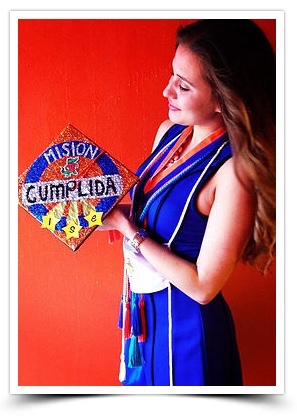
Diana Alarcon talks with Monya Fiore
Diana has a family history of relocating to new countries with the hope of a better life.
Diana’s grandfather left Cuba in 1960 as a result of the Castro regime. He moved to New York, electrical engineering degree in hand, and took a position with an international company that later transferred him to Venezuela.
Diana’s parents started their family in Venezuela and in 1998/99 faced a similar situation when the political climate changed drastically and they too had to decide whether to stay or go. With guidance from her grandfather, her parents decided to move to Miami so their children would have a better future. Diana’s mother gave up her consulting company, and her father left his career as Minister of Transportation to start over again in America.
This new start was challenging for many reasons, one being a new language. Diana could not express herself in school, and for a 4th grader who was used to participating in class, this was frustrating. Even worse, she didn’t have the words to defend herself when other students teased her.
Starting over again in a new country built a strong family bond and helped define Diana. She followed in her grandfather’s footsteps, graduating with an engineer degree and starting her career in Boston.
"It made me very aware of bias in myself…"
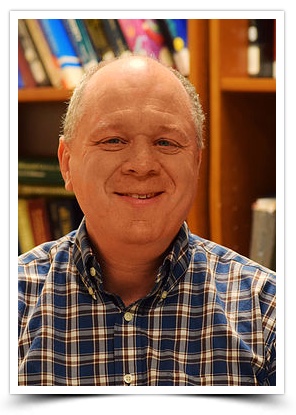
Neville Sonnenberg talks with Joia Spooner-Fleming
Neville grew up during apartheid in South Africa and became aware of race differences and injustices in society at an early age. He witnessed the imprisonment of his nanny Nora because she had tea with a friend, lost track of time, and was late walking home – missing the 9 pm curfew for black people.
Nora admitted her guilt and even apologized for her “crime.” This was a traumatic event for young Neville because it made no sense to him. He couldn’t understand Nora’s acceptance and apologies for being arrested. He struggled with how she, and society were accepting of a system that was so prejudiced.
The bias Neville witnessed in society helped shape him as a person, and as an inventor and scientist. He embraces his insight that we all have bias that we need to manage to effectively analyze situations and data. And he understands that good ideas come from everywhere and everyone, as long as we are open to them.
"I only met my wife two times, for a few hours before I met her on the wedding day"
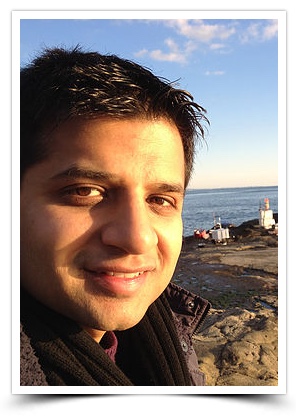
Ratul Ghosh talks with Monya Fiore
Ratul grew up as an only child in India to loving parents who were diligent about raising a kind and caring son. If they gave him a candy, they would have him share it with neighbors first so he understood the concept of sharing.
Arranged marriages are common practice in India. Parents formally reach out to acquaintances or put advertisements in newspapers to find other parents looking for brides or grooms for their children. The couples meet knowing they are considering the other for marriage. Most Indian couples who enter into arranged marriages stay in those marriages for their lifetime.
People in India believe you need to invest in the relationship first, and if you bring happiness to the marriage, versus searching for happiness within it, joy and love will come to one’s life.
This proved true for Ratul who met his wife only two times, for a few hours before marrying her. They’ve been happily married for six years and just had their first child.
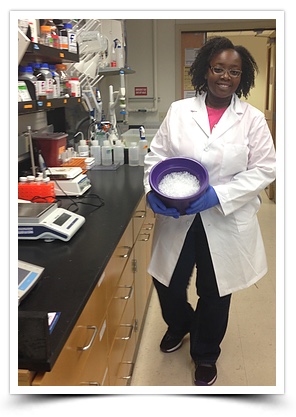
"I definitely feel like a pioneer for my family…"
Shameika Warmington talks with Camara Samuel
Shameika got a telescope for Christmas when she was in the fourth grade and it started her on a path to becoming the first scientist in her family.
Since that time, her family members have been both her support system and her biggest fans. Her family would come to research competitions and spend entire days sitting through the presentations, all the while with smiles on their faces, happy to see Shameika succeed in her field.
While attending graduate school, Shameika volunteered to judge a Chicago public school poster competition. A young female competitor got very excited to have Shameika judging her project and asked to have a picture taken with her. It was the first time the girl had seen someone who looked like her in a science career. Shameika quickly understood the importance of young people imagining themselves in science and research roles.
Shameika is proud to be an inspiration to the next generation of scientists.
Her younger sisters are pursuing STEM (science, technology, engineering, math) careers: One sister is now a mechanical engineer, and her youngest sister is on her own STEM path – just like her big sister!